What Services Do Lawn Care Companies Provide? A Full List
From weekly mowing to snow removal, here is the complete list of services a full-service lawn care company offers, what each one does, and when you need it.

Most homeowners know that lawn care companies mow, but the modern industry does far more than that. A full-service company usually handles everything outside the walls of your house, from the first spring cleanup through the last leaf pickup in November, and in many markets snow removal through the winter. This guide walks through the complete list of services a typical company offers in 2026, so you know exactly what you can hire out and what you should expect to see on a proposal.
What are standard weekly lawn services?
The core of any lawn care plan is a weekly visit during the growing season. On a standard visit the crew mows the turf at the correct height for your grass type, uses a string trimmer around beds, trees, and hardscape, edges paved surfaces cleanly, and blows all clippings off the driveway, walkways, and patio. Everything else is usually an add-on, so read the proposal carefully.
Fertilization and weed control
A fertilization and weed control program is the second building block. A typical program is six or seven visits a year, spread from early spring to late fall. Each visit is timed to the season, so the spring pre-emergent stops crabgrass before it sprouts, the summer feedings keep color without burning the lawn, and the fall applications build root strength for the next year. Most companies offer both traditional and organic programs at different price points.
How much do aeration and overseeding cost?
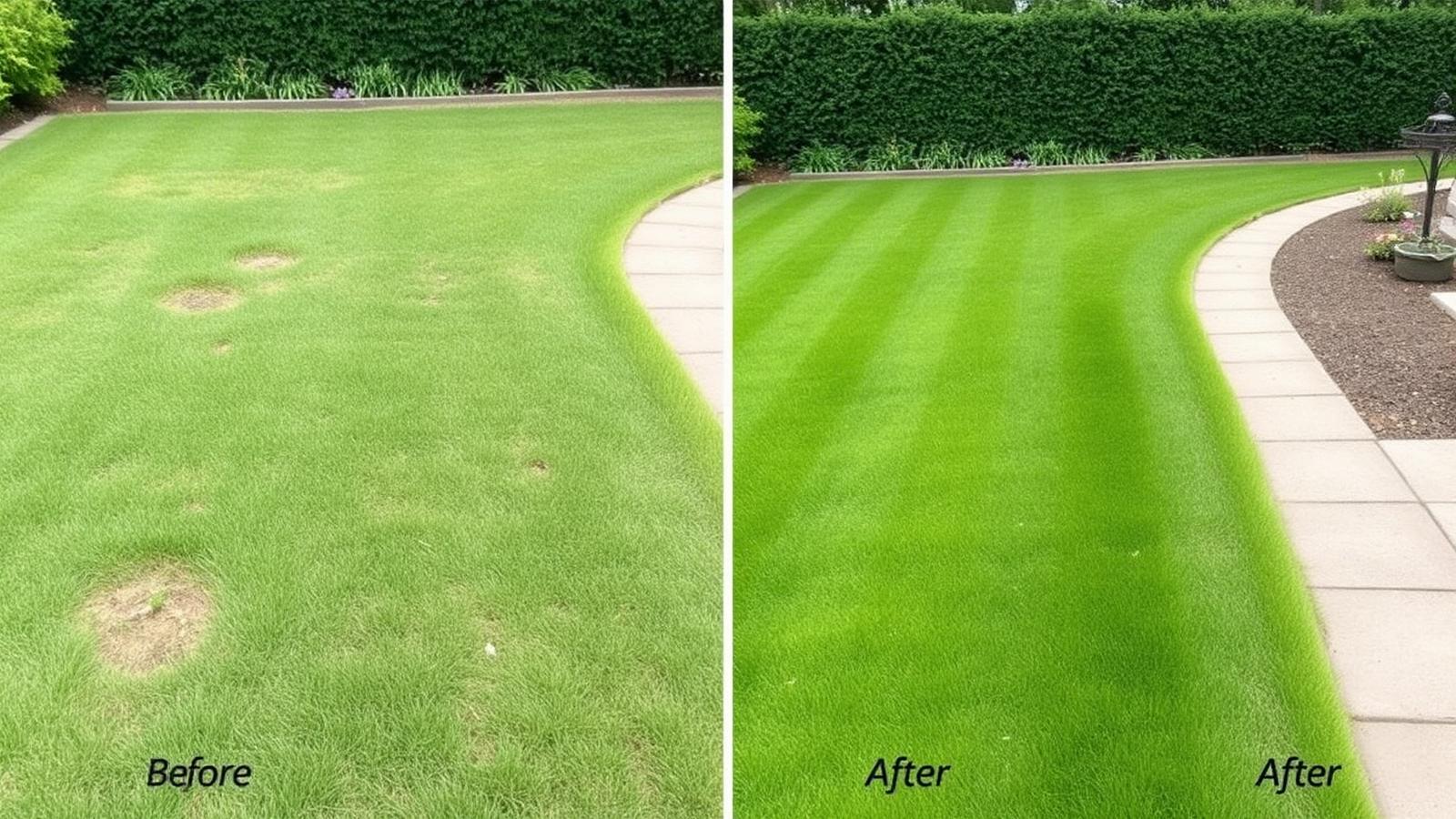
Compacted soil is the silent killer of most suburban lawns. Core aeration pulls small plugs of soil out of the ground so water, air, and nutrients can reach the root zone. Most cool-season lawns benefit from a single aeration visit in the fall, often paired with overseeding to fill thin areas. Warm-season lawns usually get dethatching or spring aeration instead. If your lawn feels hard underfoot and water pools after rain, aeration is the first thing to try.
How much do seasonal cleanups cost?
Spring cleanups clear the winter debris, cut back perennials, edge beds, and prep the yard for the first mow. Fall cleanups focus on leaf removal, usually across multiple visits from mid-October through late November. Both cleanups are usually priced separately from the weekly mowing plan and are one of the fastest ways to make the property look sharp between longer projects.
Do lawn care companies handle pest, weed, and disease control?
Beyond the standard fertilization program, most full-service companies offer targeted treatments for specific problems. That includes grub control in early summer, tick and mosquito treatments on a monthly cadence, and disease control for lawns prone to fungus. These are usually priced per visit or per season, and the company should show you the actual problem before recommending a treatment.
What landscape maintenance do lawn care companies offer?
Many lawn care companies also handle bed maintenance, including mulching in spring, weeding beds through the summer, and pruning shrubs in the correct season for each species. Some also install seasonal color, refresh mulch mid-season, or plant new shrubs. Full landscape design and hardscape installation is a different specialty and is not always offered by the same crew, so ask directly if you have a bigger project in mind.
Do lawn care companies handle irrigation?
Sprinkler service is often bundled with a lawn care plan in warmer climates. Typical irrigation services include spring startup, mid-season adjustments, leak repairs, controller programming, and fall winterization. Not every lawn care company has a certified irrigation tech on staff, so verify credentials before you commit.
Snow and ice management
In cold-weather markets the same crew that mows in July usually plows in January. Snow services include per-push plowing, seasonal contracts, salting, and sidewalk clearing. If reliable snow removal matters to you, sign a seasonal contract in October rather than calling around after the first storm, when good companies are already booked.
What should you look for in a full-service proposal?
- A written scope for each service, with visit frequency and season dates.
- An itemized price rather than a single bundled number.
- A clear policy for weather delays, missed visits, and cancellations.
- Proof of general liability insurance and workers compensation coverage.
- A named crew leader or account manager you can contact directly.
Is bundling better than a la carte?
Most companies discount 10 to 20 percent when you bundle multiple services into a single seasonal contract. Bundling also gives you one crew that knows your yard, which cuts down on scheduling headaches and duplicated site visits. The trade-off is less flexibility, so if you already have a favorite fertilization company or you want to keep your own irrigation tech, mention that at the first meeting so the proposal reflects it.
How do you choose the right service mix?
The right mix of services depends on your lawn, your budget, and how much time you want to spend in the yard yourself. A homeowner who enjoys mowing might only need fertilization and cleanups. A busy family with a big yard might want the full package. Either way, a good lawn care company will walk you through the trade-offs before quoting. For a deeper look at the pricing side of these services, read our full guide on how much lawn care costs in 2026.
Want a website that puts these ideas to work?
We design and launch premium websites for lawn care companies in about two weeks, for one flat monthly fee. Hosting, SEO and edits included.
Book a free call →