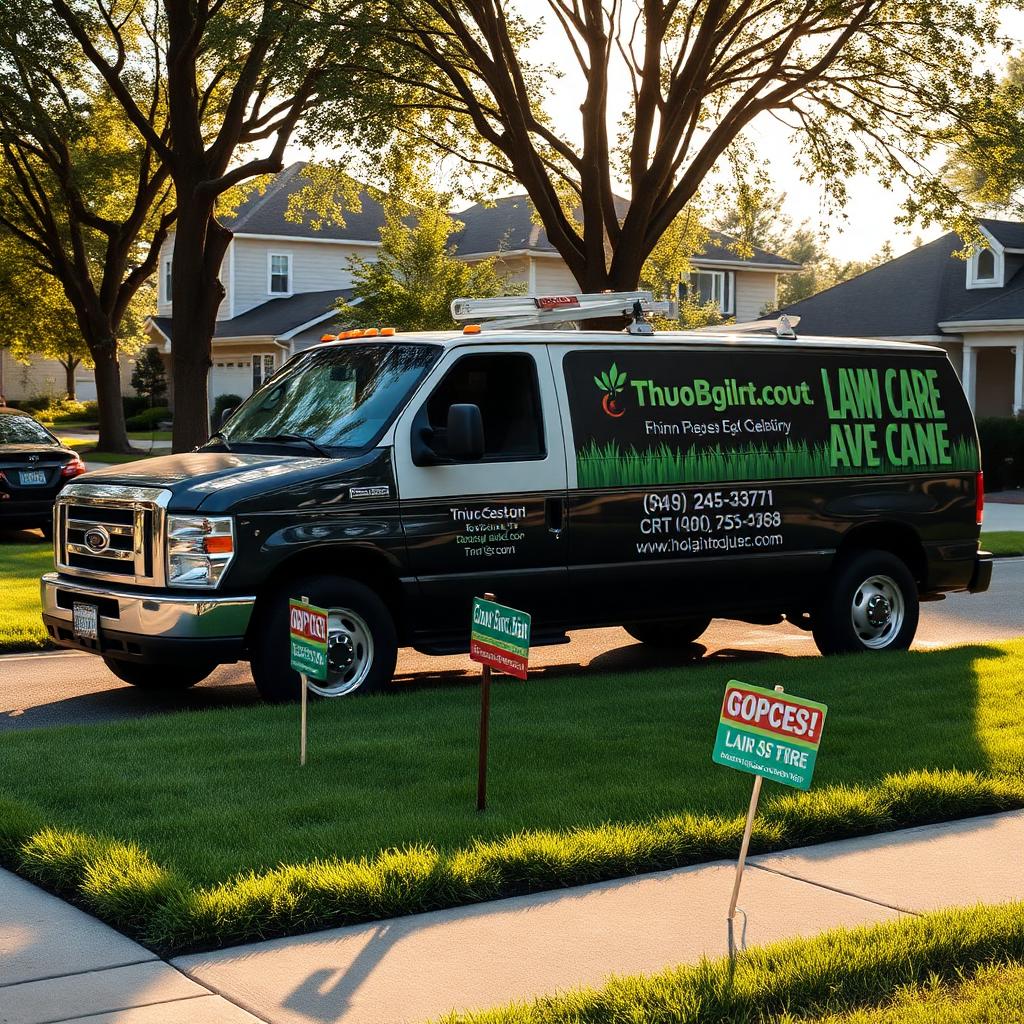
7 Lawn Care Website Mistakes That Quietly Cost You Jobs
Most lawn care websites lose leads not because they look bad, but because of seven fixable mistakes that push visitors away before they ever call.

Your lawn care website is not a brochure. It is a salesperson that works nights, weekends, and holidays. When it works, it fills your route with better customers and pushes down price shoppers. When it does not, you lose jobs you never even knew were on the table, because the homeowner clicked away in three seconds and called the next company on the search results page. In this guide we walk through the seven mistakes we see most often when we audit lawn care websites, and exactly what to fix so your site starts earning its keep.
1. The site loads slowly on a phone
More than seventy percent of homeowners searching for a lawn care company are on their phone, usually standing at the window looking at their yard. If your homepage takes more than three seconds to become usable, roughly half of those visitors will bounce before they see your logo. That is not a design problem. That is revenue walking out the door in real time.
The usual culprits are giant unoptimized hero images, page builders that ship dozens of tracking scripts, and video backgrounds that autoplay on cellular. Fixing this is not about buying a faster server. It is about serving smaller images at the correct dimensions, deferring nonessential scripts, and removing anything that is decorative rather than persuasive.

2. The phone number is buried
Older homeowners, the ones who tend to sign annual contracts and keep them for years, still call. If they have to scroll or hunt for your number, you have added friction to the single most valuable action on your site. The phone number should be tap-to-call, visible in the sticky header on every page, and repeated near every major heading. There is no elegance penalty for this. Every good local service site does it.
3. There is no clear service area
If a homeowner cannot tell within five seconds whether you serve their neighborhood, they leave. Listing your service area is not just for humans. Google uses that content to decide which local searches to show you in. A short paragraph followed by a bulleted list of the towns, zip codes, or neighborhoods you cover will move you up the local pack faster than almost anything else you can do on-page.
- Name the metro, the primary city, and every suburb you regularly service.
- Include a small map or an embedded Google map centered on your service radius.
- If you have location-specific pages, link to them from the service area section.
4. Pricing is a total mystery
You do not have to publish a full price list, but you cannot leave homeowners guessing either. Something as simple as 'weekly mowing plans start at fifty-five dollars' cuts down on tire-kicker calls and warms up the people who do call. Homeowners self-qualify against your starting price, and the ones who continue to the form or the phone are already comfortable with your range.
5. Photos are stock, generic, or missing
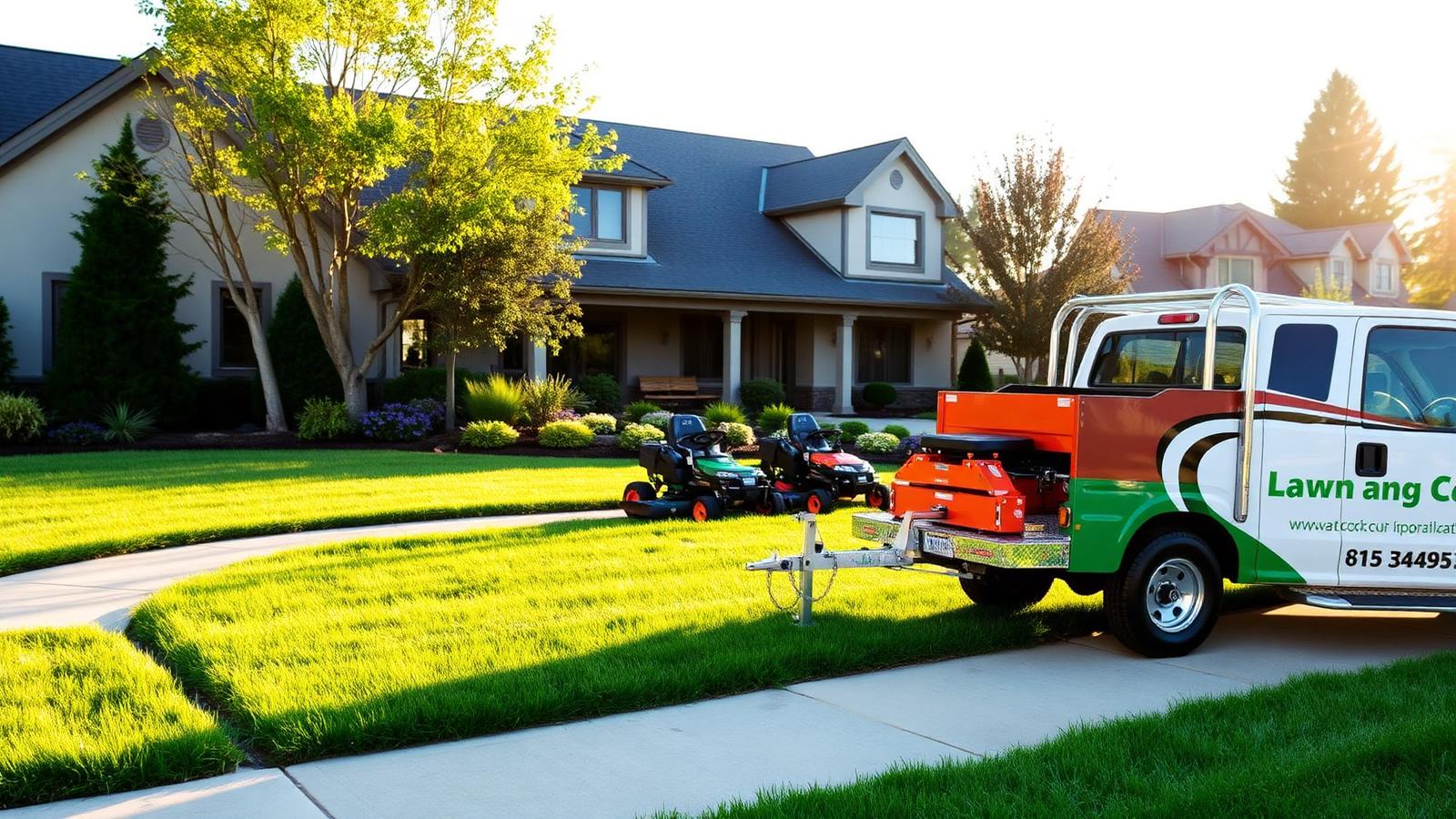
Stock photos of pristine lawns from another continent are worse than no photos. They actively erode trust. A homeowner in Ohio knows what an Ohio lawn looks like in July. Show your actual crews, your actual trucks, and the actual before-and-after transformations you produced last season. If you are new and do not have a portfolio yet, use photos of your equipment, your team standing in front of the truck, and any single satisfied customer you have permission to feature.
6. The contact form asks for a novel
Every extra field in your quote form drops the completion rate by roughly ten percent. If your form asks for name, phone, email, address, lot size, current services, preferred day, budget, and a paragraph description, you are basically asking the homeowner to write their own contract. The point of the form is to start a conversation, not to close the deal. Ask for name, phone, and address. Do everything else on the call.
7. There is no social proof above the fold
Homeowners trust other homeowners more than they trust you. Your first screen should include a star rating, a review count, and at least one quoted testimonial. If you are on Google, pull the average rating and the number of reviews directly into the header. If you have BBB accreditation, Angi Super Service, or NALP membership, include the badges. This is the single change that most predictably lifts conversion rates in the sites we redesign.
“We doubled the number of quote requests in the first month, and we did not change our ads or our prices. All we changed was the website.”
How do you put it all together?
None of these fixes are technically hard. They are just easy to overlook when you are also running crews, ordering parts, and chasing invoices. That is why we build websites exclusively for lawn care companies. We already know what works, we already have the templates, and we already know which mistakes to avoid. If your current site is checking two or more of these boxes, it is quietly costing you jobs every single week. Fix it, and the next season starts to feel very different.
What audit can you run this weekend?
You do not need to pay for a fancy audit tool to catch most of these mistakes on your own site. Open your site on your phone with cellular data, not wifi, so you can feel the real load time. Count how many seconds it takes for the page to become usable. If it is more than three, that alone is a problem. Then try the following: tap the phone number to see if it dials, tap the address to see if it opens a map, and tap into the quote form to check how many fields it asks for. Every single one of those actions should be either painless or unnecessary.
Now switch to Google and search for the phrase lawn care company in followed by your city. Look at the three companies that show up in the map pack. Click into each of their sites the same way a homeowner would. What do they do that you do not? Is there a video of the owner introducing the crew? Is there a service area map? Is there a pricing range? Steal shamelessly. Nothing in this industry is proprietary. The winning practices spread because they work.
How do these mistakes compound during peak season?
During January it does not matter much if your site loses a few visitors. During the spring rush, when every homeowner within twenty miles is thinking about their lawn on the same weekend, the same conversion problems cost you exponentially more. If your site normally leaks thirty percent of visitors on mobile, and traffic triples in April, the number of jobs you failed to book triples too. Every lawn care operator has heard the story of the neighbor who started smaller and then somehow grew past them. Nine times out of ten, the neighbor did not have a better crew. They had a better website during the two months of the year that actually mattered.
Fixing the site in July is the wrong plan. Fixing it in November is exactly right. You want a full off-season to write new copy, take new photos, and let Google reindex before the phones start ringing again. The companies that treat the website like a seasonal instrument, sharpened before the season starts, are the ones that quietly pull ahead year after year.
Where do you start if you can only change one thing?
If you have thirty minutes and one change to make this week, put your phone number as a sticky tap-to-call button at the top of every page on your mobile site, right next to a star rating pulled from your Google reviews. That single change, in every audit we have ever done, moves the needle more than any other individual tweak. It respects the homeowner time, it uses the device they are already on, and it shows social proof at exactly the moment they are deciding whether to trust you. If that goes well, work through the other six mistakes over the winter. By spring you will have a website that is doing about twice as much work per visitor, on the same traffic, at zero additional cost.
Rebuild or fix: which is right?
You do not always need a full rebuild. Sometimes a targeted set of fixes on the existing site delivers eighty percent of the value at ten percent of the cost. But there is a threshold, and if your site is more than four or five years old, has been through three different template providers, and now nobody in the shop remembers how the parts fit together, a fresh build is almost always cheaper in the long run than another round of patches. The signal to rebuild is not how it looks. It is how much friction it takes to make small changes.
Whichever path you take, the checklist in this article is a useful diagnostic. Score your current site out of seven. Anything less than five is a site that is actively costing you money. Anything at five or six is a site worth patching. A perfect seven is where you want to be before the next spring rush begins. If you would like a second pair of eyes on the audit, that is exactly the kind of conversation we have every week with lawn care owners across the country.
Want a website that puts these ideas to work?
We design and launch premium websites for lawn care companies in about two weeks, for one flat monthly fee. Hosting, SEO and edits included.
Book a free call →